 EN
EN  SK
SK 
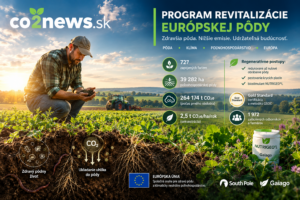
European soil revitalization program
Soil is the second largest carbon sink on our planet, yet in Europe today, 60 to 70 % of soil is in an unhealthy and degraded state. Long-term use of conventional agricultural practices (viac…)

carbon credits, also called emission credits or carbon certificates, are financial instruments that are used to offset greenhouse gas emissions. Their goal is to support measures to reduce emissions of CO2 and other greenhouse gases into the atmosphere. Carbon credits are often part of emission rights markets such as the EU ETS (European Union Emissions Trading System), but they also exist outside of it. (More on (The ultimate guide to voluntary carbon markets)
Soil is the second largest carbon sink on our planet, yet in Europe today, 60 to 70 % of soil is in an unhealthy and degraded state. Long-term use of conventional agricultural practices (viac…)
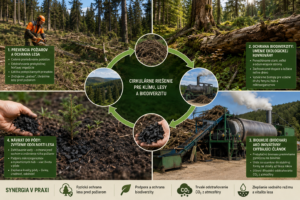
The systemic connection of forest fire prevention harvesting, biodiversity protection and biochar production offers a circular bio-economy model. The collected forest waste is processed in pyrolysis plants instead of open burning. (viac…)
The European Union is at a crossroads. Rising energy prices, geopolitical instability exacerbated by the conflict in the Middle East and the US-Iran war, and extreme heat waves are forcing Brussels to reconsider its key (viac…)
The UN Climate Change Conference COP30 in Belém, Brazil, marked an important milestone for global carbon policy. The topic of carbon pricing was high on the agenda, with several international initiatives emerging to consolidate Article 6 of the Paris Agreement. (viac…)
Climate change and global warming require not only radical reductions in existing emissions, but also active removal of historical carbon from the atmosphere. Biochar is proving to be one of the most promising and effective in this regard. (viac…)
This report elaborates an integrated model that combines forest and landscape fire prevention, biodiversity protection, processing of residual biomass and disaster wood into biochar, soil restoration, water retention, climate change adaptation measures and multi-source financing through public budgets, (viac…)
Climate change has long since transcended the boundaries of a purely environmental issue and has transformed into a fundamental economic, security and civilizational risk. We are facing extreme droughts, collapsing water regimes in the country, rapid land degradation and (viac…)
Achieving so-called geological carbon neutrality requires not only reducing current emissions, but also offsetting residual emissions from fossil fuels through permanent carbon dioxide removal (CDR). Although carbon credit mechanisms (carbon (viac…)
The climate investment world often favors tech giants like sleek towers for directly capturing carbon from the air, giant warehouse-sized hydrogen electrolyzers, or hundreds of miles of carbon pipelines. These assets attract media attention. (viac…)
The world is currently on the brink of disaster, facing the threat of a sixth mass extinction of species. This unprecedented biodiversity crisis is not only bringing with it the loss of animals and plants, but also a world of forests that are less resistant to disease, more often (viac…)
The European Union is entering a crucial phase of its decarbonisation strategy and energy transition in 2026. The Union faces a huge challenge: to maintain its leadership in the fight against climate change while (viac…)
Biochar (biochar) is defined as a solid, carbon-rich product resulting from the process pyrolysis – thermochemical decomposition of biomass with limited or completely excluded access to oxygen. (viac…)
From the perspective of a leading expert on environmental economics, it represents carbon pricing a fundamental pillar of modern fiscal and environmental strategy. Its primary goal is the internalization of negative externalities – that is, the transfer of social and (viac…)
Management initiatives ICVCM, VCMI and SBTi represent key actors in the voluntary carbon market (VCM) ecosystem, whose common goal is to establish principles and guidelines to increase transparency, quality and trust. These initiatives have emerged (viac…)
The evolution of global climate policy represents a fundamental shift in how the international community approaches responsibility for emissions. The original Kyoto Protocol stood for a "top-down" approach, where goals were directively assigned only to industrially advanced (viac…)
The European Union has committed to achieving climate neutrality by 2050 at the latest under the European Climate Law. This goal requires not only deep decarbonisation but also the deployment of permanent carbon removal technologies, which (viac…)
The European Union has set itself an ambitious target under the European Climate Law to achieve climate neutrality by 2050. To achieve this goal, it is necessary not only to drastically reduce greenhouse gas emissions, but also to deploy (viac…)
Reducing methane emissions is becoming a key pillar of the European Union's climate policy. Methane is an extremely potent greenhouse gas with a warming potential of more than 80 times higher than carbon dioxide. Since breeding (viac…)
Carbon markets are systems that allow the trading of environmental benefits in the form of carbon credits. To understand how they work, we need to start with the basic „currency“ of this market. (viac…)
The integration of methane emission reductions from livestock production into the EU certification framework for carbon sequestration and land reductions (CRCF) is a strategic necessity to meet the objectives of Regulation (EU) 2021/1119 (European (viac…)
SPONSORED BY
MOST READ
LEGISLATION
