 EN
 SK


Main newsSponsored byMost read
Sustainability. Carbon neutrality
The issue carbon neutrality it affects individuals, organizations and even countries, and is of key importance for climate protection and the future of our planet. Carbon neutrality is important for the fight against climate change and means that the production of emissions is offset by measures to reduce or eliminate them. This category of articles provides information on how to achieve carbon neutrality, what energy efficiency means and what renewable energy sources are. (More at co2news.sk)
Discover
Green transformation of European cultural heritage
Europe's cultural heritage and creative industries are at the forefront of the fight against the climate crisis. Through Horizon Europe, the European Union is investing tens of millions of euros in innovative projects that combine art, architecture, science and (viac…)
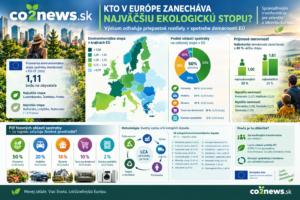
Green architecture in practice: How EU agricultural policy instruments influence environmental outcomes
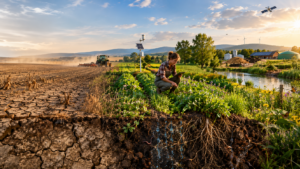
Circular and regenerative agriculture: The key to restoring soil and combating climate change
Europe is currently facing a triple planetary crisis – climate change, pollution and biodiversity loss. Land degradation is affecting 60 to 70 % of agricultural land in the EU, with increasing weather extremes and disrupted water cycles directly threatening (viac…)
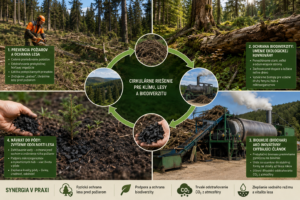
Circular Economy (Forest Fire Protection + Biochar + Biodiversity)
The systemic connection of forest fire prevention harvesting, biodiversity protection and biochar production offers a circular bio-economy model. The collected forest waste is processed in pyrolysis plants instead of open burning. (viac…)
Transforming our world: The 2030 Agenda for Sustainable Development
In September 2015, a historic event took place at the United Nations in New York. Heads of State, Government and dignitaries celebrating the seventieth anniversary of the founding of the United Nations took a landmark decision (viac…)
The truth about European cities and the net zero target: Why just planting trees is not enough?
We are currently witnessing unprecedented climate efforts at the local government level. As part of the mission "100 climate-neutral and smart cities", 103 European cities determined to achieve net zero already (viac…)
Deploying Nature-Based Solutions (NBS) to strengthen the climate resilience of European cities
European cities and regions have faced unprecedented climate change in recent decades. Increasingly frequent and intense heat waves, flash floods and the associated degradation of the urban environment are posing a critical challenge. (viac…)
The Recycling Myth: Why Focusing on Waste Is Hindering a Real Green Transformation
For decades, the world economy has been built on a simple linear structure that can be summarized in four steps: extract a material, make it into a product, sell it, and then throw it away. This process, often referred to as „take, make, use, throw away,“ (viac…)
A billion-dollar opportunity for Europe: How the circular economy will save industrial competitiveness
The circular economy today represents a major strategic business opportunity to expand the European market, secure significant economic returns and reduce our dependence on limited global resources. At the same time, it is (viac…)
How to combine forest protection, fire prevention, biodiversity and biochar? A circular solution to the climate crisis
The biodiversity crisis and climate change are now inextricably linked. Climate change, with extreme droughts and heat waves, is significantly accelerating the destruction of the natural environment, particularly through devastating forest fires. On the other hand, the loss of (viac…)
The Path to Carbon Neutrality: A Comprehensive Guide to Corporate Climate Action According to SBTi Standards
The climate crisis represents one of the most pressing challenges of our time. Organization Science Based Targets initiative (SBTi) was created to enable companies and financial institutions around the world to play their part in the fight against global warming. SBTi (viac…)
How to properly measure sustainability? Metrics, indicators and food systems transformation
In an era of global urbanization, where cities consume three-quarters of natural resources and generate up to 80% of greenhouse gas emissions, food policy is becoming a strategic imperative for regional resilience. Local governments can no longer view food as just a (viac…)
The path of cities to carbon neutrality: How to responsibly manage residual and negative emissions
The transition to a carbon-neutral society is not only an urgent challenge but also an opportunity to build a safer future. The European Union has set itself, through the Paris Agreement and the European Green Deal, (viac…)
Nature-based solutions: How LIFE helps climate and people
Climate change and biodiversity loss are two of the biggest, yet deeply interconnected, crises facing our planet today. Climate change is directly accelerating the loss of natural habitats and wildlife. (viac…)
Strategic Workforce Development Plan for Climate Neutrality by 2050
Achieving the package's objectives Fit for 55 – reducing emissions by 55 % by 2030 and achieving net zero by 2050 – represents not only a technological challenge, but above all a profound structural imperative for the European labour market. Our modelling shows that (viac…)
Can greener roads truly be sustainable? Bioasphalt, forest boundaries and the frontiers of the bioeconomy
Transport is the largest source of greenhouse gas emissions in the European Union and has made little overall progress in reducing them sustainably in recent decades. While public and political attention is focused mainly on the electrification of vehicles themselves (viac…)
Institutional governance and climate policy of the National Bank of Slovakia
The traditional mandate of central banks, which is to maintain price and financial stability, is inextricably linked to environmental sustainability in the 21st century. (viac…)
Analysis of the impact of climate risks on investment portfolios and strategic management of the NBS
The management of foreign exchange reserves of the National Bank of Slovakia (NBS) is strictly anchored in Act No. 566/1992 Coll., which imposes on the institution the obligation to manage foreign exchange values while respecting the rules of the Eurosystem. However, from the perspective of a quantitative strategist and risk manager, (viac…)
Strategic Implementation Plan: Integrating Green Skills into Corporate Learning Processes
Achieving climate neutrality by 2050 is not just an environmental commitment, but a critical strategic imperative for maintaining global industrial competitiveness. The transition to a net-zero economy requires a profound transformation (viac…)
SPONSORED BY
MOST READ
LEGISLATION
