EN
EN  SK
SK 

The world is currently on the brink of disaster, facing the threat of a sixth mass extinction of species. This unprecedented biodiversity crisis is not only bringing with it the loss of animals and plants, but also a world of forests that are less resistant to disease, more often pandemics, more devastating floods, and critical shortages of water and food. These factors directly threaten the very survival of the human species, leading to forced migration and international conflict. In response to these alarming threats, global institutions and governments are coming up with a new strategy that promises salvation: by creating biodiversity credit markets. But is it really a path to salvation, or is it just an elaborate tool for financial enrichment at the expense of nature?
What are biodiversity offsets and how do they (not) work?
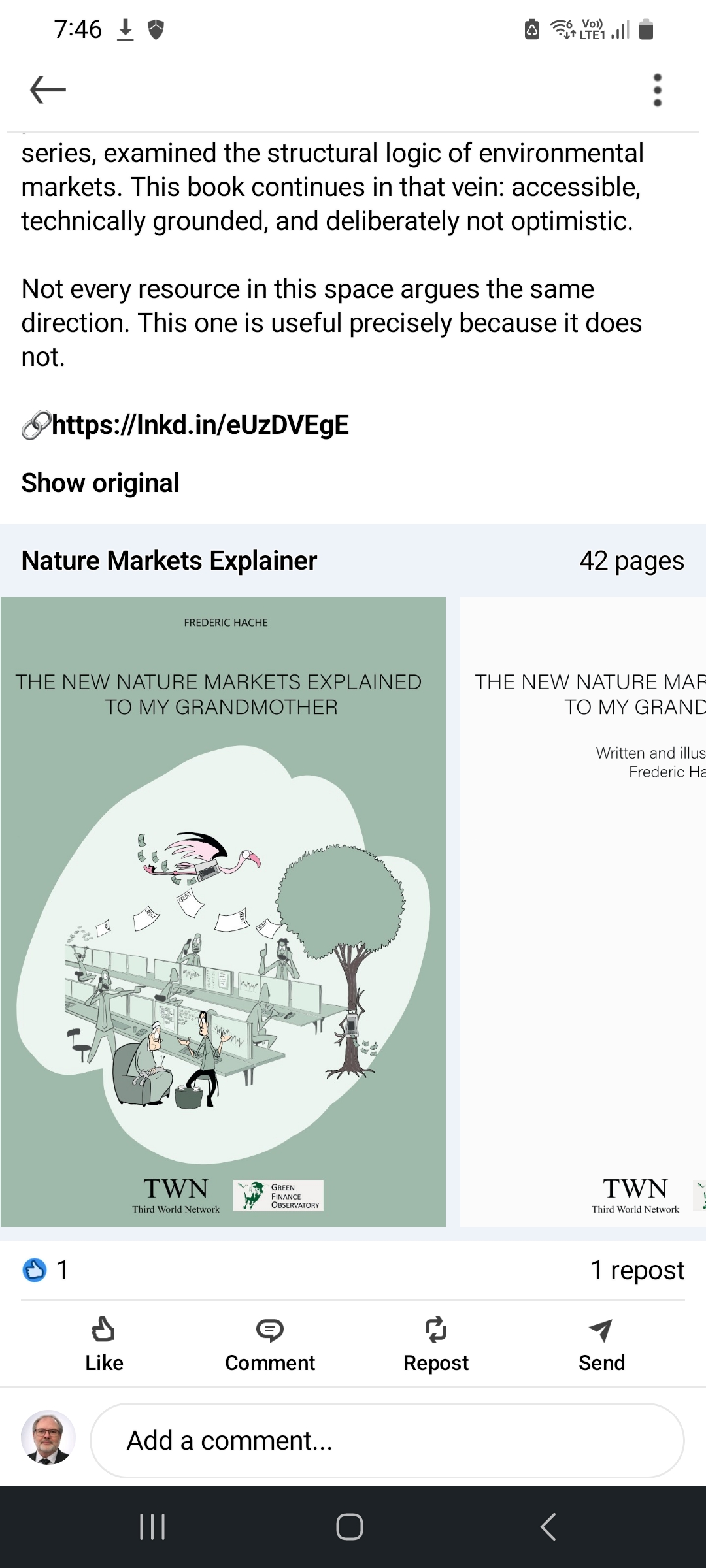
The basic idea of biodiversity compensation (so-called offsets) is simple at first glance: if a company wants to build a factory, for example, in a place where flamingos nest, instead of the state forbidding it, it allows the destruction of the habitat on the condition that the company compensates for this damage. The company hires a project developer who creates a new habitat somewhere else – for example, within a 10-kilometer radius. After approval by the certification company, „biodiversity credits“ are issued, which the destructive company purchases. This creates the illusion that the company is neutral in relation to biodiversity.
Some proponents of this model even advocate an extreme version in which the destruction of one species in one place could be offset by the creation of habitat for an entirely different species on the other side of the world. For example, a company could destroy a flamingo habitat in France and compensate by creating a bat habitat in Greece. In this way, the compensation becomes standardized and generic. Since compensation is no longer tied to specific destruction at a given location, it allows you to acquire credits before the destruction itself and sell them an unlimited number of times until they are used up.. This is exactly what financial markets are about – creating a global financial market is more important to them than saving biodiversity itself. It’s like carbon offsets, where an airline promises to plant trees for your flight, when in reality it doesn’t offset your footprint because the trees may have burned down or were not at risk at all.
The problem is that offsets often don't work in practice. The science of ecosystem restoration is still in its infancy, and the complex web of dependencies between millions of species cannot be simply recreated. The data clearly shows this. Australian government research has shown that only 10 % sites designated for compensation saw improvement. In 55 % sites, the state of biodiversity did not improve at all and in 30 % cases it even worsened. Another study, analyzing 558 compensation projects in Canada, showed that the net loss of habitat reached a terrifying 99 % despite attempts to compensate. Compensations thus ultimately only lead to increased destruction of nature and represent a false solution.
Battle of Words: Credits vs. Compensation
As the scientific community has increasingly come to grips with the failure of offsets, some market advocates have begun to argue that the newly created credits will not actually be used as offsets. This requires an incredible amount of linguistic acrobatics. For example, a former advisor to the French institution Caisse des Dépôts Biodiversité has said that companies will use the credits to „balance“ the damage to nature, but this practice should not be called offset. An international alliance affiliated with the UN recommends that companies not use credits as offsets, but at the same time allows them to claim that their projects actually compensate for the damage caused. In reality, without offset use, there is no reason to buy these credits on a large scale, so under the guise of „pure profit“, de facto offsets continue to be talked about.
The Dark Side: Land Confiscation and Human Rights Suppression
Like carbon offsets, biodiversity markets require vast tracts of land, which developers seek out where land is cheap and indigenous rights are weak, particularly in countries in the global South. These processes lead to so-called „land grabbing“ and take place on indigenous peoples’ lands. The consequences are tragic and include forced evictions, torture, rape and, last but not least, murder.
For example, a carbon offset project Northern Kenya Rangelands deprived the Samburu, Borana and Rendille pastoralist tribes of access to millions of hectares of land so that they could sell credits from this land to giant corporations such as Meta, Netflix and British Airways. Armed guards, paid by the organization managing the project, have committed dozens of serious human rights violations here. In Cambodia, indigenous people from the Kuy and Bunong tribes were denied the right to collect herbs and mushrooms in their own forests, while an NGO collected huge profits from selling credits to companies such as Disney. In Peru's Alto Mayo National Park, people's homes were demolished by park rangers in order to obtain carbon rights. Carbon Brief analyses have revealed that up to 72 % offset projects investigated showed harm to local communities and indigenous peoples. Oxfam also warns that the total land area needed for offset projects could be up to five times the size of India.
The true motives of elites and the threat of financialization
So why is this demonstrably dysfunctional model being pushed so vehemently? This approach fully suits the interests of economic and political elites and helps maintain the status quo. Presenting markets as a "solution" cleverly distracts from the need to adopt stricter legislative regulations and change the established destructive model of production and consumption.
Governments and companies are comfortable pushing a narrative of a lack of funding. They argue that states have no money, and therefore the free market and private capital must take over the responsibility for saving nature using new environmental assets, which, paradoxically, are also to be financed by public subsidies. This is the complete financialization of nature – an approach in which ecological goals must be subordinated to profitability, otherwise they will not be realized. The World Economic Forum is tempting us with the idea that prioritizing nature could create business opportunities worth an incredible $10 trillion. Massive lobbying only accelerates this process; for example The key UN biodiversity conference COP16 was attended by 124 lobbyists representing banks alone, outnumbering many countries' delegates, with the extremely diverse Ethiopia sending just 5 representatives. The power to set priorities in environmental protection is thus quietly shifting from the state to hedge funds.
What are the real solutions?
Real and long-term solutions do not require dubious credit, are long-known and focus on the root cause of the crisis: land use change for agriculture and animal husbandry. The data reveals that 77% of all agricultural land is used to raise livestock for meat and dairy, while this sector returns a paltry 17% of the world's calories and 38% of protein to the planet.. A major scientific report by EAT-Lancet highlights the need to reduce food waste and shift from meat-based diets in rich countries to plant-based diets, limiting red meat to once a week, for example.
It is extremely important to redirect massive government subsidies. According to the UN, there are approximately $1.7 trillion in public finances annually that subsidize environmentally harmful activities, including agriculture and fossil fuels. If governments were to redirect even a fraction of this existing money to nature conservation, it would completely close the declared „hole“ in funding. To this must be added much stricter environmental regulations, limits on plastic production, a ban on overfishing, and a halt to massive pollution of the seas, land, and air.
We may seem powerless against corporations and banks, but the surveys are clear: up to 80% of citizens in rich economies are willing to make changes in their lives, and the same 80% of people worldwide are publicly demanding stricter climate action from their governments. However, people are mostly living in a false social reality and underestimate the extent of similar thinking around them. However, once they understand that their demands have mass support, they can be inspired by the historical struggles of civil rights movements, unions or suffragettes and join forces to force political representatives to act. After all, nature deserves real protection, not just another line in the investment bankers’ ledgers. JRi&CO2AI
Source: Nature Markets Explained