 EN
EN  SK
SK 

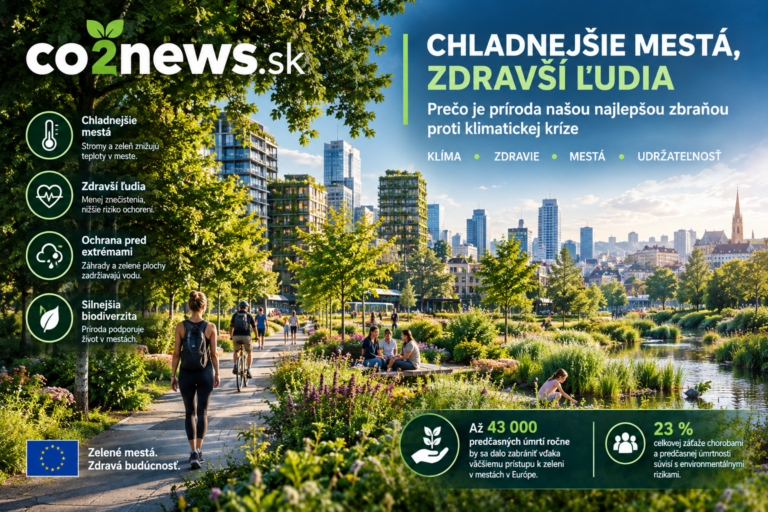
Cities are now on the front lines of climate change and are fundamentally shaping the health prospects of their residents. Rising temperatures and more frequent extreme weather events, particularly heat waves, pose a direct threat to the human body.. The urban heat island effect, combined with unsustainable traffic and a lack of green spaces, exposes residents to dangerous heat, air pollution, noise and social isolation.
Expert findings show that Approximately one quarter of the total burden of disease and premature mortality is related to environmental risks. In this context, green and blue infrastructure becomes indispensable protective infrastructure, which can adapt cities to climate change while protecting public health.
Protection from heat, extreme precipitation and reduced mortality
Rising temperatures are intensifying the risk of overheating in urban neighborhoods, but natural elements can effectively mitigate these impacts. Trees and parks cool the environment through shade and evapotranspiration (water evaporation), capture pollutants in the air and help with managing rainwater during torrential rains.
In Europe, access to greens is currently not recommended for up to 60 % populations, while its improvement could prevent more than 43,000 premature deaths per year. Complex modifications of public space are also of fundamental importance. An example is the model Superblock in Barcelona, where modeling showed that restructuring transport and space could prevent almost 700 premature deaths (of which approximately 60 directly due to the expansion of green areas).
Protection from environmental risks also brings tangible financial savings. For example, in Finland, it is estimated that a 10% increase in the supply of green spaces reduces the annual cost of treating type 2 diabetes by 1,7 %.
Climate resilience and mental well-being
Extreme weather changes and a deteriorating environment not only put a strain on the physical body, but also increase psychological stress and the risk of mental disorders. Studies confirm that regular contact with urban greenery provides scientifically proven regenerative effects. In Nordic countries, high availability of greenery has been associated with lower risk of depression and regular walks in nature with reduced consumption of antidepressants. Long-term research in children has also shown that a higher proportion of greenery in the nesting area reduces the risk of developing 12 out of 18 psychiatric disorders studied in adulthood.
The implementation of the urban green rule brings extraordinary results 3-30-300 (see 3 trees from home, have 30 % of tree cover in the neighborhood, and live within 300 meters of a park). In areas where residents met this rule, 23 to 76 % decrease in indicators of poor mental health, medication use and visits to psychologists or psychiatrists. Expanding green axes in cities can reduce the incidence of mental health problems by half, which represents a potential healthcare savings of 45 million euros per year. 10 % increase in greenery also reduces the cost of treating depression by 6 %.
System integration and a case study: Finnish city of Lahti
For green infrastructure to be effective in protecting people from the impacts of climate change, it must be planned equitably and accessible to all, especially in neighborhoods most at risk from high temperatures. Natural elements must not be seen as just a decorative addition, but as essential health and climate infrastructure. This requires direct collaboration between urban planners, health professionals and environmental and climate teams.
An inspiring practical example is the Finnish city Lahti. As part of its 10-year program „"Nature Step to Health"“ The city has linked public health with climate change mitigation and adaptation, biodiversity protection, and long-term cost reduction. It has established a so-called „"Health Forest" with a 900-meter barrier-free route, conducts field training on planetary health for city employees and pilot tests prescription of outdoor activities by doctors.
Urban greenery represents one of the most effective investments in climate resilience and disease prevention. Systematic integration of nature into urban planning protects residents from extreme heat, promotes their overall well-being, and creates sustainable cities prepared for the climate challenges of the future. JRi&CO2AI

