 EN
 SK


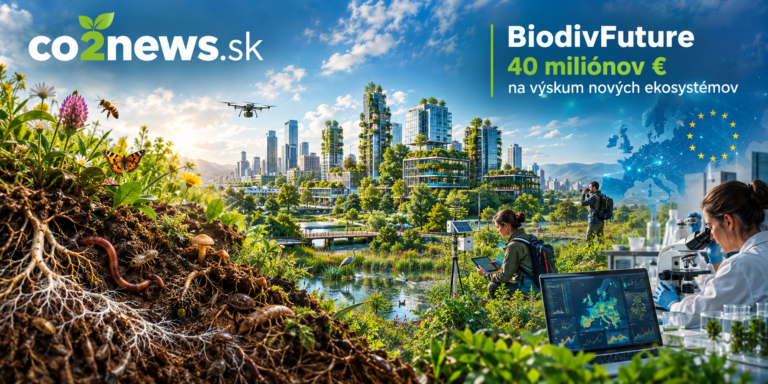
European co-financed partnership for biodiversity Biodiversity+ officially announced a new joint research challenge with the name BiodivFuture. The notice was published by the European Commission's Directorate-General for Research and Innovation on 9 September 2026. This The research grant program is aimed at supporting innovative research in the field of biodiversity, socio-ecological consequences and future trajectories of the so-called new ecosystems.
What are new ecosystems?
Concept new ecosystems (novel ecosystems) refers to ecosystems that are fundamentally different from the ecosystems that historically existed in a given location, most often as a result of human influence. They are also systems that are unlikely to return to their original state, with or without human intervention.
Exploring these specific environments is key to understanding how nature adapts to global change and what new challenges or opportunities this presents for human society.
Challenge objectives and links to EU and UN strategies
Supported research projects aim to generate practically applicable knowledge (actionable knowledge) that will drive transformative change for nature and help reverse the adverse decline in biodiversity. The knowledge gained should contribute to maintaining resilient and ecologically fully functional ecosystems.
Challenge objectives BiodivFuture directly linked to key strategic frameworks:
- The EU Biodiversity Strategy to 2030
- Global Biodiversity Framework from Kunming and Montreal (Kunming-Montreal Global Biodiversity Framework)
Financial allocation and three main research topics
The total allocation of funds for the BiodivFuture call amounts to approximately EUR 40 million. The call will focus on investigating the causes, effects and co-consequences of new ecosystems in different types of environments around the world. The emphasis is on supporting high-quality research projects that apply holistic, systemic and integrated approaches.
The research scheme is divided into three non-exclusive thematic areas:
- Understanding the functioning of new ecosystems – research into mechanisms, dynamics and ecological processes in these systems.
- Study of pathways and processes leading to the emergence of new ecosystems – analysis of factors and trajectories that cause the transition to new ecosystem states.
- Studying the fair and equitable sharing of biodiversity benefits in the context of new ecosystems – socio-ecological dimension and fair distribution of benefits for society.
Conditions for applicants and composition of consortia
In terms of qualitative criteria, submitted projects must demonstrate a significant transnational added value. The call strongly encourages the use of interdisciplinary and transdisciplinary approaches, as well as the active involvement of non-academic stakeholders, with the aim of co-creating new knowledge with direct benefits for practice.
Aspiring research consortia must meet the following eligibility criteria:
- The consortium must consist of eligible partners from: at least three different countries, that are financially involved in the challenge.
- From these participating countries, there must be at least two Member States of the European Union or countries associated with the programme Horizon Europe.
Important dates and information for applicants
The full text of the call and accompanying documentation, including detailed eligibility and evaluation criteria, are available on the official Biodiversa+ partnership website. For interested parties from the research community, the partnership organized a September 10, 2026 general informational webinar.
(Note: The press release does not state exact deadlines for submitting project proposals; interested parties are advised to check the official Biodiversa+ portal).
About the Biodiversa+ partnership
Partnership Biodiversity+ was established as a joint initiative of the BiodivERsA network and the European Commission and officially launched its activities October 1, 2021. It operates as a European co-financed partnership for biodiversity and forms a key implementation tool of the EU Biodiversity Strategy to 2030.
During its seven-year implementation period, the partnership plans to declare a total of six co-funded joint calls with an estimated total budget of approximately EUR 250 million. It currently brings together 81 organizations responsible for programming and funding research, as well as environmental policy actors from 40 European and associated countries. As part of the Horizon Europe program, it successfully connects science, policy and practice. JRi&CO2AI

